Return to Zanzabar
Visiting Steven Arnold: Cocktails in Heaven

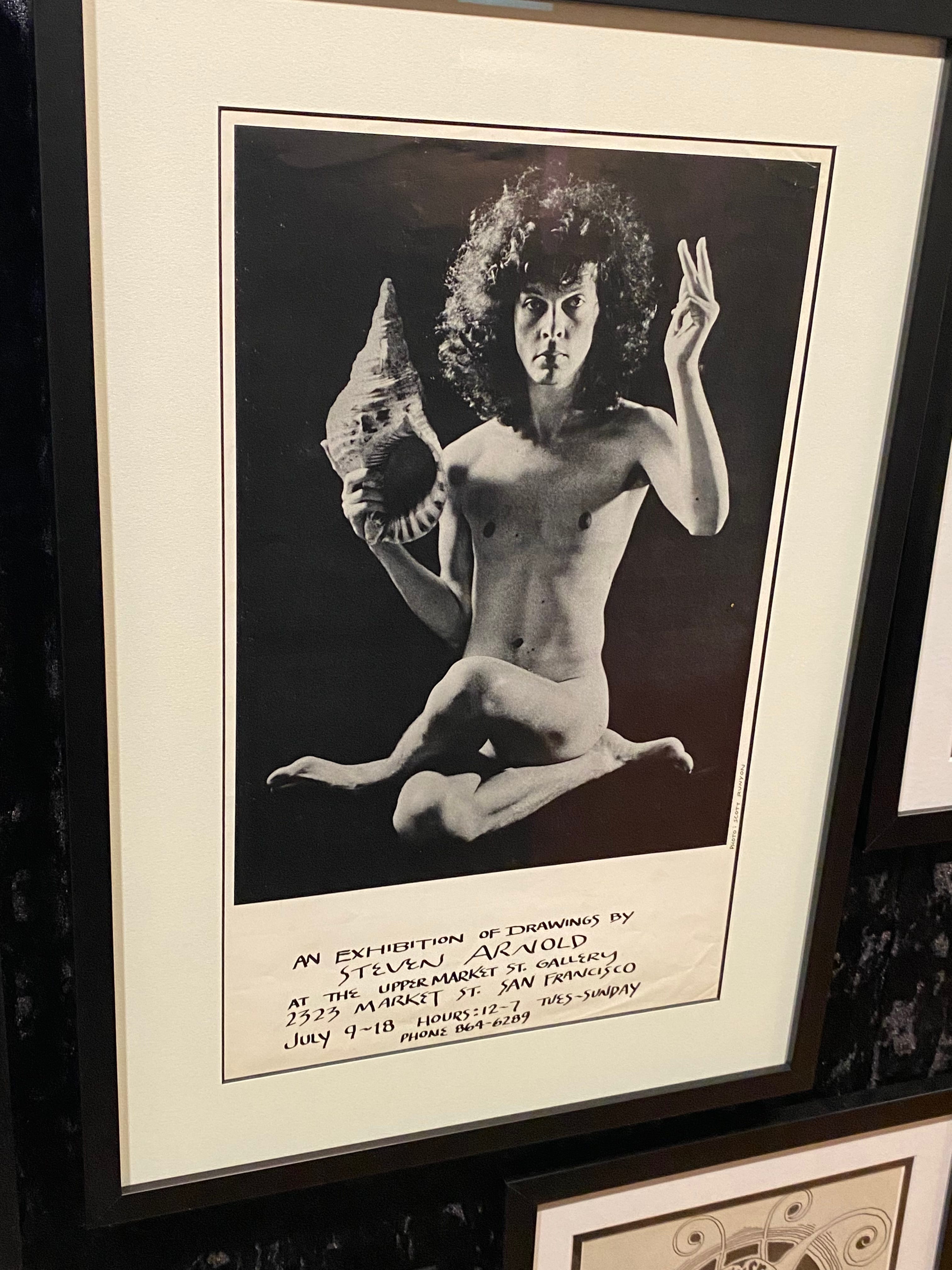
Last week I took the 62 to the 10 to the 210 to the 134 to the 101 to 405, from Joshua Tree to Santa Monica, blazing sunny desert to blazing sunny beach, to visit the latest incarnation of Zanzabar [sic] on earth, an installation at Del Vaz Projects—Steven Arnold: Cocktails in Heaven—that re-creates the tinsel-town-within-Tinsel-Town that was Arnold’s studio and salon. A maximalist journey described in a maximalist sentence in a modest attempt to give you an idea of the fucking expansive (and vice versa) life of Steven Arnold. A quote from Arnold in the exhibition notes: “My studio is more like Barnum and Bailey fucks Louis the Fourteenth, in drag.”
I’d been trying to figure out a time to drive into Santa Monica, a place that even people in most parts of LA dare not drive, since the exhibition opened in January; since I’d talked with Steffie Nelson last winter while she was writing about the installation’s imminence; since asking the spirit of Steven Arnold to grant me one of his pictures for my book cover last spring (granted); since meeting Vishnu Dass three years ago when I visited the Steven Arnold archive in his apartment and heard whispers of the desires he had to see Arnold’s work exhibited beyond the documentary he’d made. The drive was a little more than three hours and the sound track to it was ABSOLUT ARNOLD,
a playlist Scott Ewalt made in honor of the exhibition. Ewalt’s an artist and DJ who modeled for Arnold, and for a time, lived at Zanzabar. Driving is new to me so the journey to Zanzabar was a different kind of pilgrimage, since I learned how to drive with my brain fully formed and capable of apprehending the risk of death.
After meeting and hugging Jay Ezra Nayssan, the founding director & chief curator of Del Vaz Projects, located in one section of his house, the first encounter was with Zanzabar’s namesake: a large, papier-mâché clown’s head whom I had crossed paths with years before in the part of Vishnu’s apartment he called “Steven’s Room.” “Here’s Zanzabar!” He said, “Steven found him at a flea market—see here where his name is written on the back of the head, Z-A-N-Z-A-B-A-R, and that’s the name Steven chose for his whole menagerie in LA.” As Vishnu continued the tour of the apartment, in total overwhelm I quickly added a note in my phone about the clown, which autocorrect changed to “Zanzibar.” “Hello again!” I greeted the clown. It would be rude to pretend we hadn’t already met.
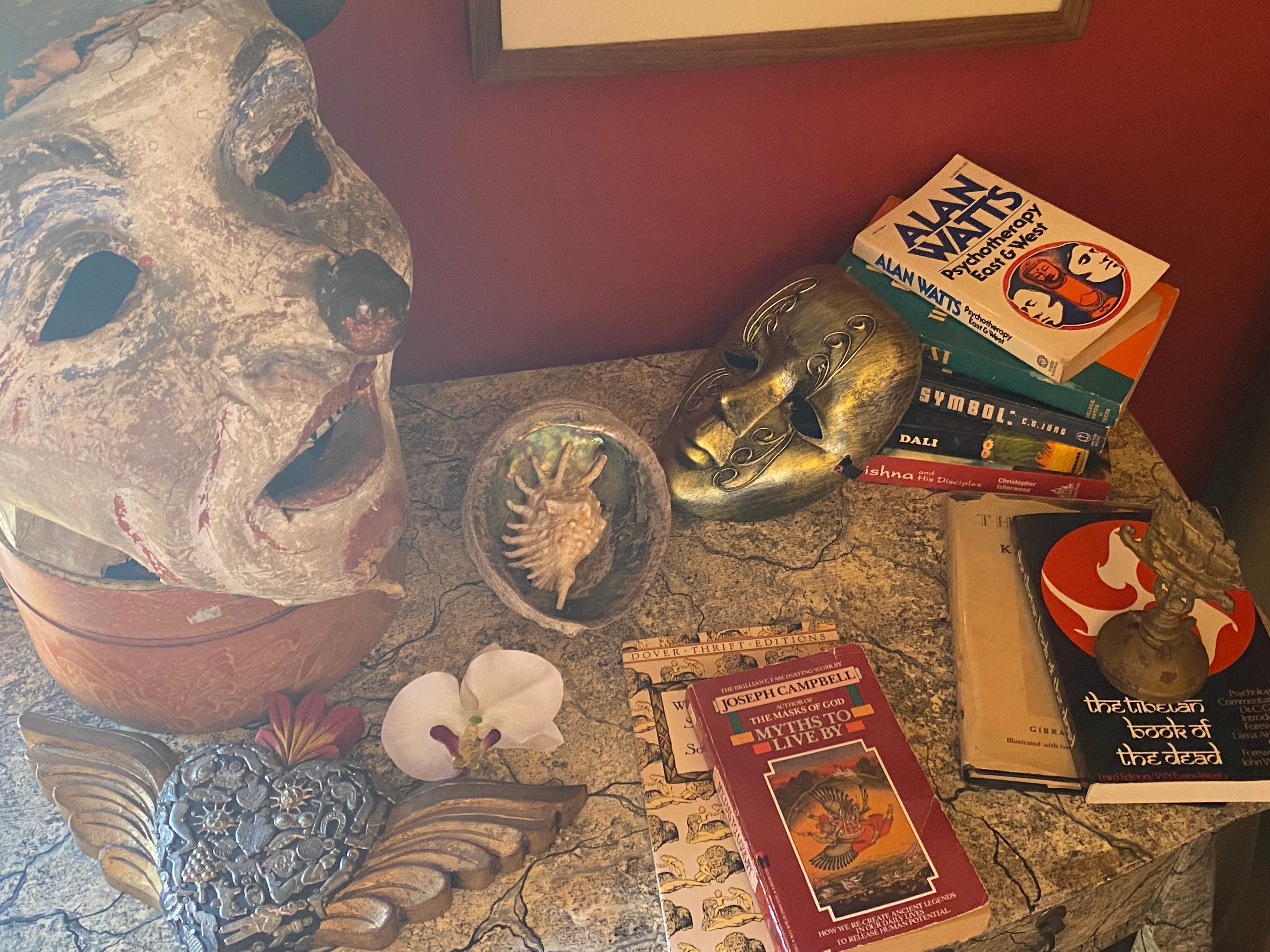
Zanzabar presided over a table filled with books: a paperback copy of The Tibetan Book of the Dead I in fact had just ordered for myself, alongside Alan Watts, Joseph Campbell, figures whose books were already freshly stacked on my writing desk at home in anticipation of my next pilgrimage upstate to Headlands in Marin county, where I’ll be writing about Druid Heights all summer. Zanzabar truly has a tricky spirit, presenting me with the same copies of books I have yet to read that he’s already breezed through, a wise clown. But the point is: Zanzabar spent years soaking up Steven Arnold’s work, which is exuberant, outrageous, and steeped in a disciplined, lifelong spiritual path that puts him in intimate proximity to am esoteric world of spiritual seekers who all ended up in California, where all spiritual seeking really blossoms into the weirdest version of itself. Jarrett Earnest describes it this way, which might be the true California Dream: “totally campy but also no joke, radiating authentic spirituality.”
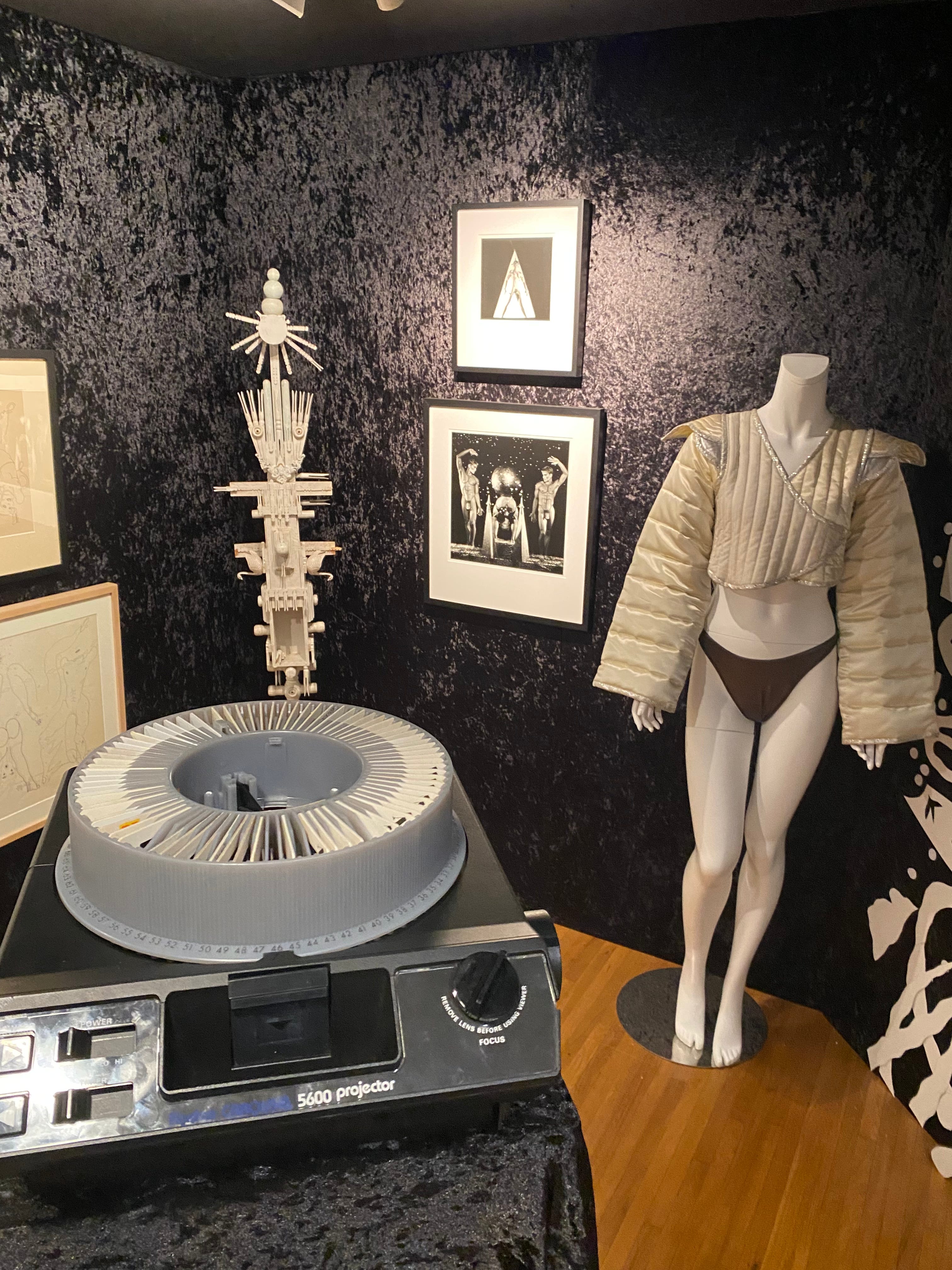
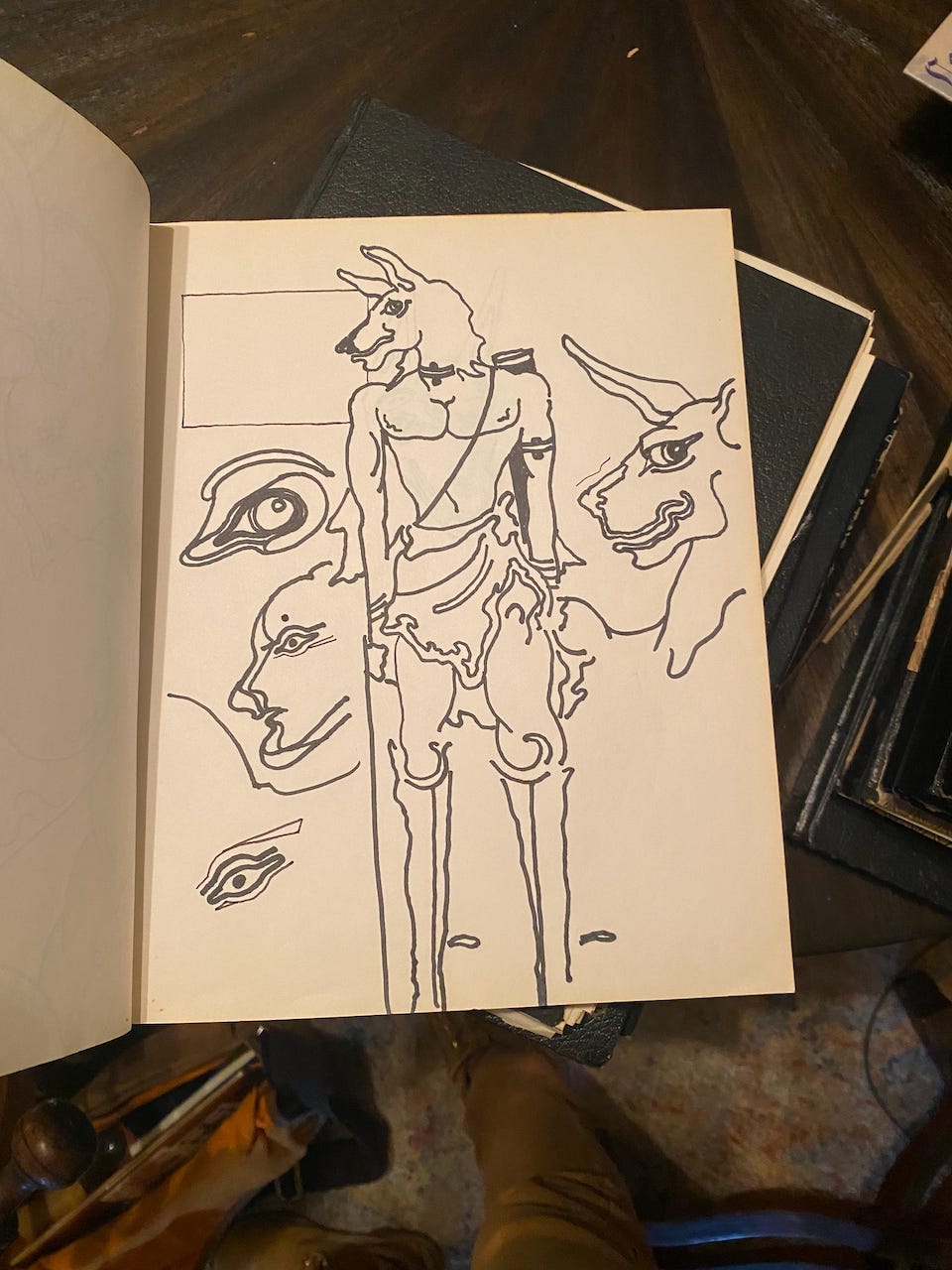
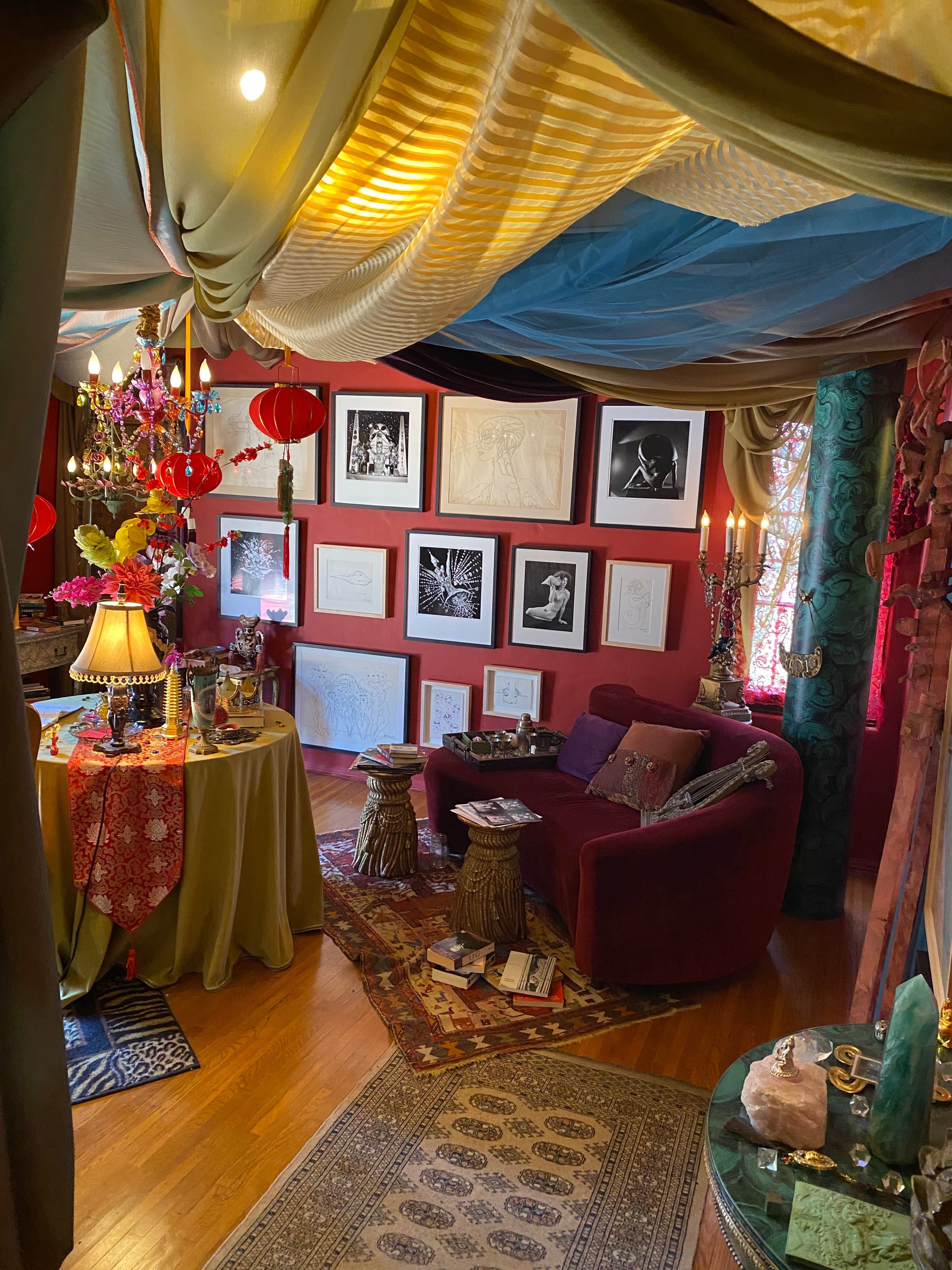
The installation is my favorite kind: sumptuous, completely immersive, and so lovingly rendered (“Are these books from his actual library?” “No, we had to really zoom in on the photographs of the studio to source all of the books individually.”). The level of love and meticulous attention to detail is directly proportional to the high high of being there, engulfed by a sense of the artist as a living, thrumming spirit. Arnold was a virtuoso: there are line drawings, paintings, photography, sculptural assemblages, costumes, a projector full of slides with more photographic images of Arnold’s work with costume, set, tableaux, each little square an elaborate world. “They don’t make ‘em like they used to,” Jay said. The walls screamed: Well go on! Make your own world! You might as well have somewhere fun to wait while this one catches up to you, if it ever does.
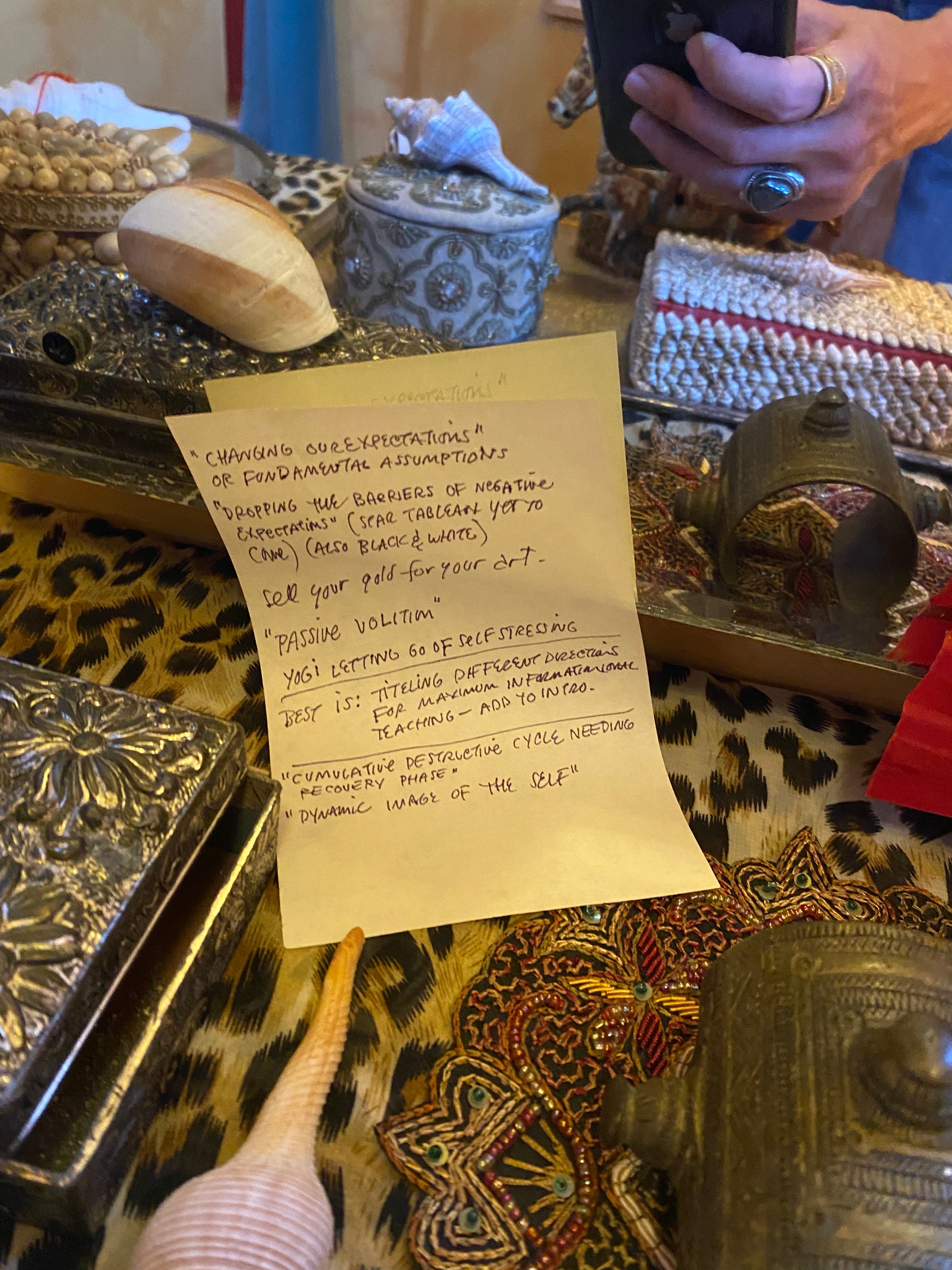
After an excess of exposure, in total exaltation, I drove a few minutes to the beach to great the ocean and thank all of Southern California for the conditions it created to make Steven Arnold’s art and life at Zanzabar what it was. Steven Arnold: Cocktails in Heaven, reconstitutes the Zanzabar Studio from photographic evidence on earth until June 6th in LA: then it travels to San Francisco and beyond, and maybe I’ll follow it to each place like a groupie, who knows?
Later in the evening I drove to the ICA to read from Bargain Witch at an event + panel put on by Semiotext(e) and DOPAMINE Books. It had been Steven Arnold’s birthday earlier that week (May 18th) and I was still high on the time I’d spent in Zanzabar so I thought I’d read the section of my book about him, a tribute. Of course, all throughout the section I’d read, I was mortified to see how the typo had survived, unnoticed by the copyeditor: Zanzabar’s intentional misspelling wasn’t there, instead, it was Zanzibar. I could almost picture the clown laughing in my face. I felt totally ashamed: had Jay seen it? And Vishnu? And every kindred spirit that love of Steven Arnold had brought into my life? A price I’ve paid for working with trickster spirits before, a price I’ll pay again I’m sure.